
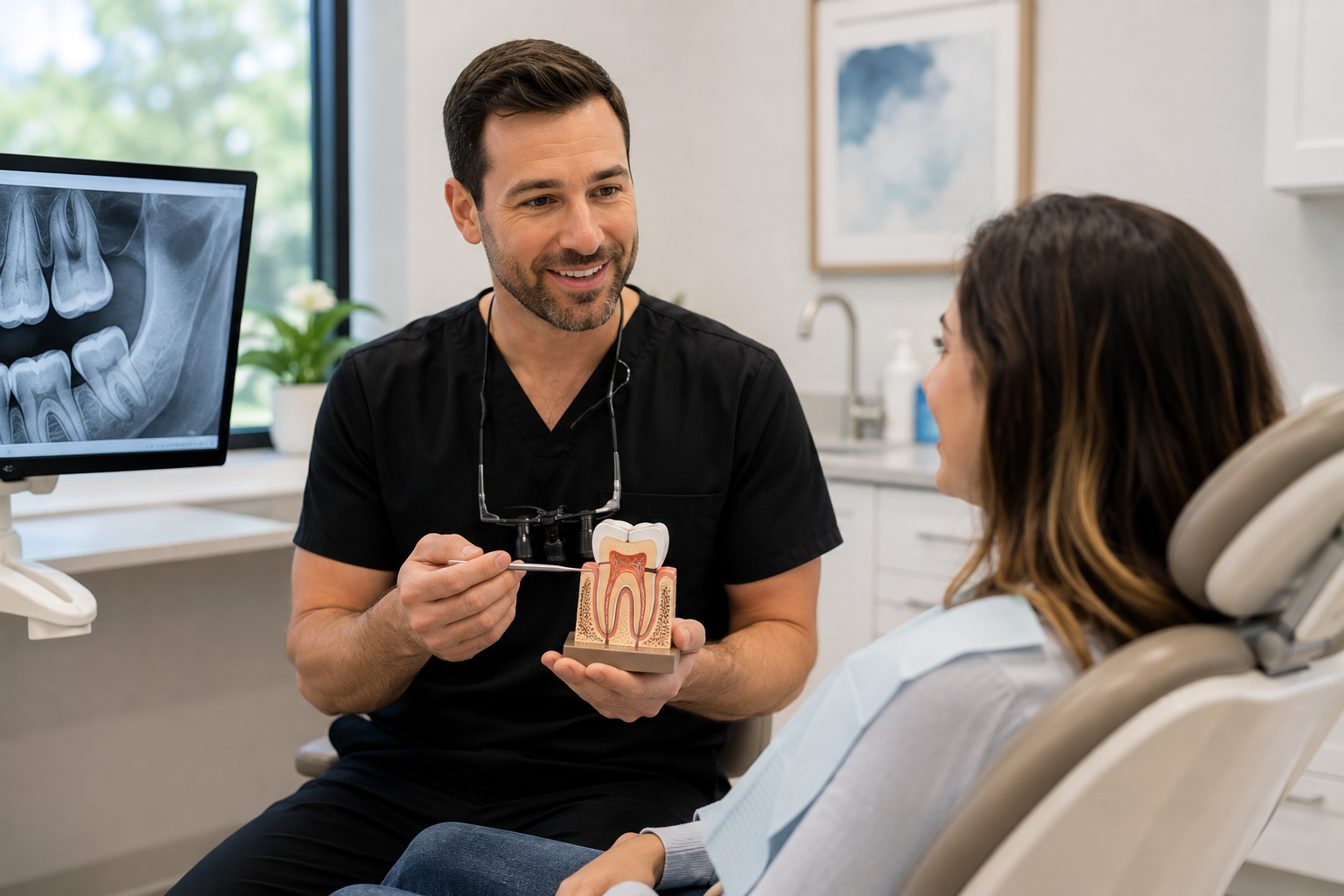
The Truth About Root Canals: Modern, Comfortable Treatment Explained
Root canal treatment is often misunderstood, which can make patients feel anxious before they know what the procedure involves. In reality, root canal treatment is designed to remove infection or inflammation inside a tooth, relieve pain, and help save the natural tooth when possible.
If you live in or near Cleburne and have persistent tooth pain, swelling, or temperature sensitivity, a dental evaluation can help determine the cause and the appropriate next step. F. Lee McLemore, DDS provides comprehensive dental care from the Weatherford office for patients throughout the surrounding area.
Why Root Canals Are Needed
Inside every tooth is soft tissue called pulp. Deep decay, repeated dental procedures, a crack or chip, or damage to a tooth can cause the pulp to become inflamed or infected.
Root canal treatment removes the affected pulp, cleans and disinfects the inside of the tooth, then fills and seals the space. The tooth is restored afterward with a filling or crown when needed to protect it and restore normal function.
Signs You May Need Evaluation
Only a dental examination can determine whether root canal treatment is appropriate. However, schedule an evaluation if you have:
- Persistent tooth pain or pain when chewing
- Sensitivity to hot or cold that lingers
- Swelling or tenderness around the gums
- A darkened tooth
- A cracked, chipped, or severely damaged tooth
- A pimple-like bump on the gums or drainage near a tooth
These symptoms can have different causes, but prompt care can help identify the source and prevent the problem from worsening.
What Happens During Treatment
A root canal starts with an examination and X-rays to assess the tooth. The area is numbed with local anesthetic to keep you comfortable during the procedure.
The dentist makes a small opening in the tooth, removes the infected or inflamed pulp, cleans and disinfects the inside of the tooth, and seals the canals with a biocompatible filling material. A crown or other restoration may be recommended afterward to protect the tooth and restore its bite function.
Depending on the tooth and the complexity of treatment, care may be completed in one or more appointments.
Recovery and Aftercare
Some temporary tenderness or sensitivity may occur after treatment. Follow the dentist’s specific aftercare instructions, maintain your usual brushing and daily cleaning between teeth, and avoid chewing hard foods on the treated tooth until your restoration is complete.
Contact the dental office if you have significant pain, increasing swelling, or symptoms that do not improve as expected. Learn more about our general dentistry services.
Root Canal Myths
A common myth is that root canals are inherently painful. The purpose of treatment is to address pain and infection inside the tooth, and local anesthetic is used during the procedure to help patients remain comfortable.
Another myth is that removing the tooth is always the better option. When clinically appropriate, saving a natural tooth can help maintain normal chewing function and preserve the surrounding teeth. Root canal treatment is a well-established way to treat infection and help retain the tooth.
Get Timely Dental Care
If you have ongoing tooth pain, swelling, or another concern, do not wait for symptoms to become more severe. A prompt evaluation can help identify the issue and determine whether general dental treatment, root canal treatment, or a referral is appropriate.
F. Lee McLemore, DDS provides patient-focused dental care from the Weatherford office. Contact the office to request an evaluation.